
What Is Our Practice For?
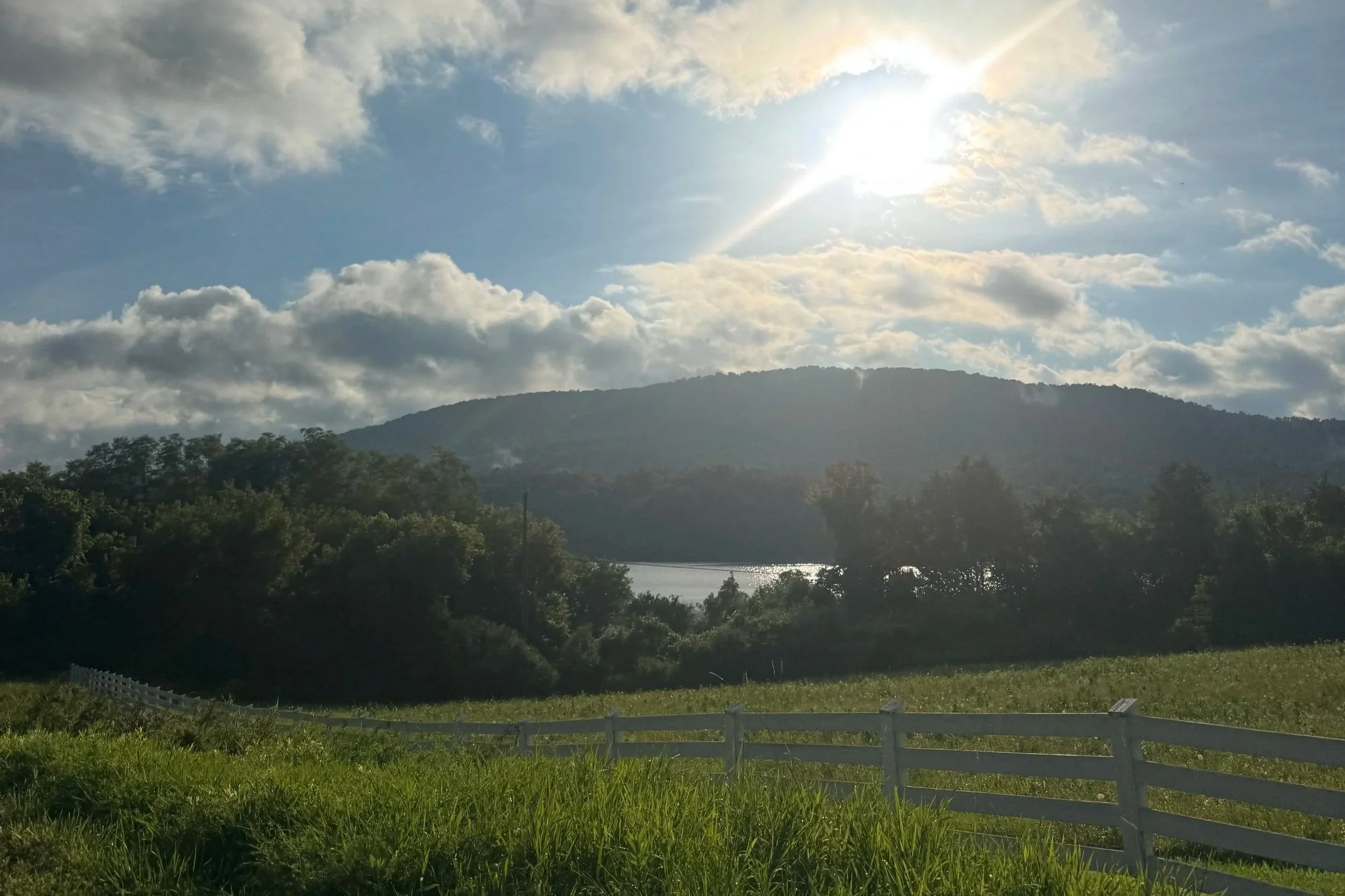
Early summer evening, Colyer Lake, Pennsylvania
Lately, I’ve been thinking more deeply about a question that has always been at the heart of practice for me:
What is our practice for?
Whether our practice is yoga, meditation, mindfulness, conscious breathing, a conscious relaxation practice or simply taking a few moments daily to pause and arrive, we are not practicing simply to become better at the practice itself.
Our practice is for our life.
Of course, what happens while we practice matters. We may settle the nervous system, release tension, restore energy, become more aware of what is happening in the body and mind, or simply create a little more space.
But eventually the practice ends. We move from our “formal practice” back into the rest of our lives.
That is where things get very interesting, and that is where I think those of us who teach and practice could be focusing just a bit more these days.
How does practice shape what we notice?
The choices we make?
The way we use our energy?
The way we speak and act?
Our capacity to stay present when something is difficult?
Sometimes practice may help us find our footing in the middle of something deeply personal.
Sometimes it may help us have more patience with someone we love, see a situation more clearly, recognize that something needs to change, set a boundary, or realize that what we most need is rest.
Practice can also help us notice and stay present for what is good: moments of connection, beauty, ease, joy, and peace that can otherwise pass by unnoticed.
And sometimes it may help us stay present and engaged with what is happening beyond our own immediate lives, in our communities and in a larger world confronting suffering, violence, injustice, war, and uncertainty.
Practice does not make any of those things go away. Nor is the goal to simply calm ourselves down about what is happening.
Practice can create a little more space between what happens and what we do next.
What we do with that space is part of the practice.
We can notice what is happening in the body. We can notice the thoughts and stories moving through the mind. We can notice fear, anger, exhaustion, urgency, compassion, or the impulse to turn away.
And then, perhaps, we have a little more room to choose.
That choice will not look the same for everyone, or even for the same person at different moments.
Sometimes what is needed is action. Sometimes it is a difficult conversation. Sometimes it is listening, helping, creating, advocating, or showing up for someone we love. Sometimes it is restraint. Sometimes it is setting something down, preserving our energy, or recognizing that something is simply not ours to carry.
There is no single right way for practice to show up in a life.
And the relationship moves in both directions. Our lives bring richness, depth, and meaning to our practice. The difficult moments, the relationships, the work, the uncertainty, the joy, the beauty, and the choices we face all become places where we can practice awareness and conscious response.
Over time, these small moments of arriving, noticing, and choosing can shape how we meet ourselves, one another, and the world around us.
Practice for the life we are living
This is also part of what we explore through Path to Calm.
Path to Calm, and the community it serves, is one part of my work in the world. My life also includes writing and advocacy, legal work, and helping to lead an outdoor recreation business. I don’t experience those parts of my life as separate from practice. Practice moves with me into all of them, and what I encounter there inevitably comes back into what I teach.
At Path to Calm, we practice with the understanding that what we cultivate in practice moves with us into the rest of our lives. We explore not only how meditation, conscious breathing, and embodied movement can help us find greater steadiness, but how that steadiness can support the way we live, work, care, create, and engage with the world around us.
Our lives all look very different. So do the ways we engage in the world. The point is to practice in a way that allows us to become more present for the choices that are ours to make.
If this aspect of practice is of interest to you too, perhaps ask from time to time:
How is my practice supporting the life I am living right now?
Where might a little more steadiness create room for greater clarity, connection, courage, or care?
And when we notice something is asking for our attention, or regularly drawing our awareness about the world, our relationships, or ourselves, we can ask,
What, if anything, is mine to do?
And if something is mine to do, how can my practice support the way I choose to respond?
This way of living, engaged, present, and awake to both difficulty and joy, is itself a practice.
So bring compassion to that practice, too.
And when you lose the thread, begin again.